
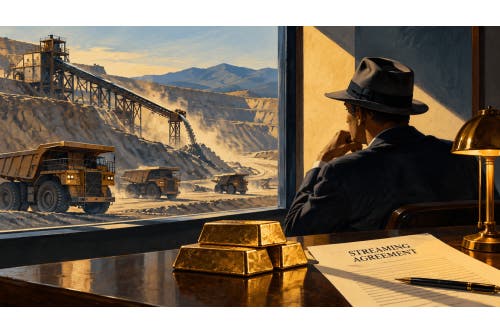
Gold prices can soar while mining profits barely budge. The reason? Rising costs.
Diesel, labor, equipment, and mine construction can eat into a producer's gains. As Monday's report on producer-price inflation showed, businesses are facing their steepest cost pressures in years.
But not every company that profits from gold production pays those bills. Gold streaming firms use a different model that can help protect their margins.
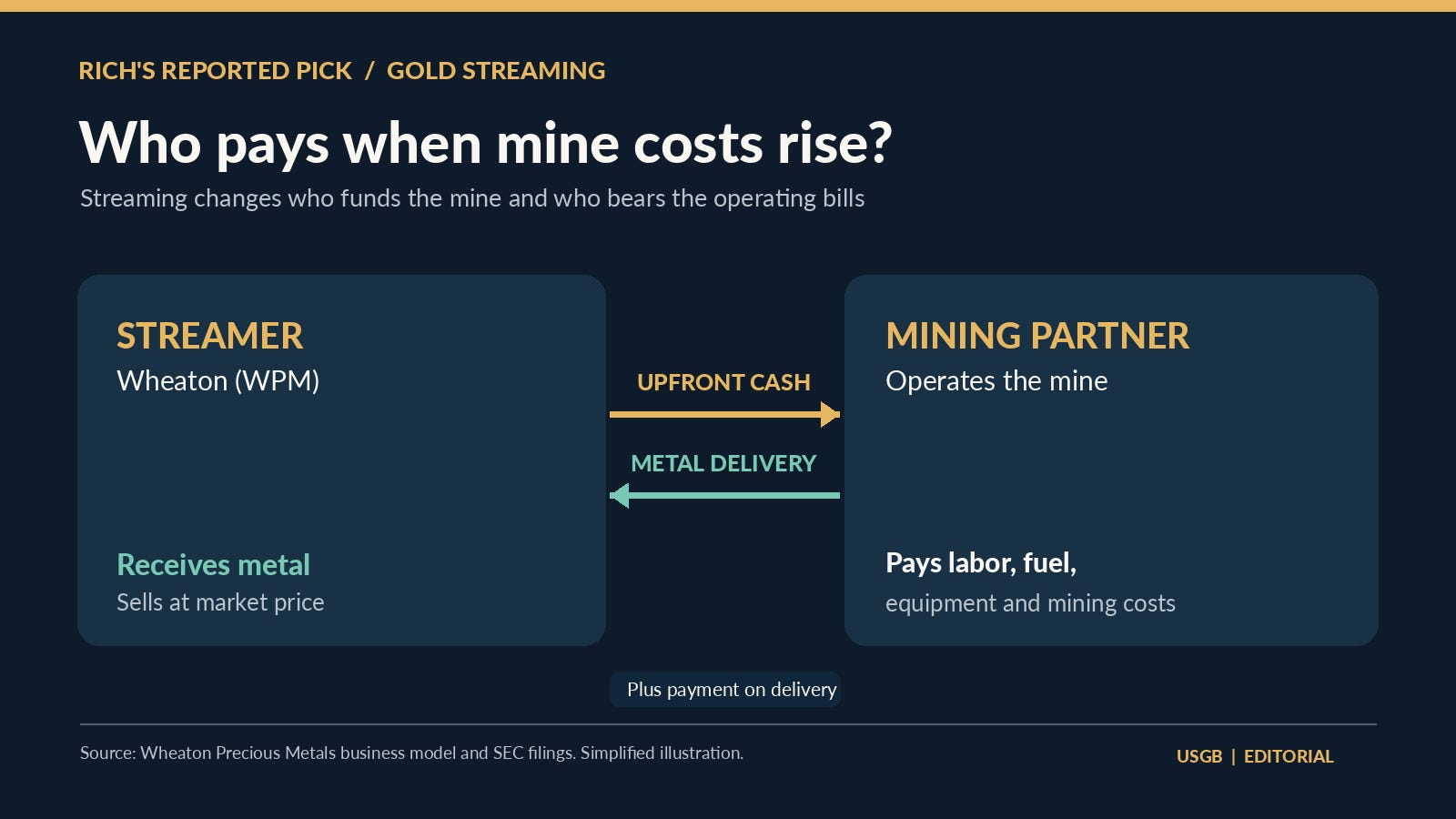
HOW GOLD STREAMING WORKS
Traditional miners, such as Barrick Mining (B) and Newmont (NEM), spend billions developing and operating mines. They bear the costs of digging, processing, and transporting the metal.
Streaming companies help finance those operations instead.
Wheaton Precious Metals (WPM), for example, pays miners cash upfront in exchange for the right to buy part of their future metal output. It then makes an additional payment when each ounce is delivered, often at a set price below the market rate.
Wheaton sells the metal at prevailing prices and keeps the difference.
The miner gets capital without issuing new shares or taking on conventional debt. Wheaton gets access to metal without running the mine.
WHO BEARS THE COST INCREASES?
The answer becomes critical when inflation rises.
If diesel prices jump 20%, a miner's fuel bill climbs. If wages or equipment costs rise, operating margins can shrink even when gold prices hold steady.
A streamer generally doesn't pay those bills. Its purchase cost is set by contract, though some contracts link payments to market prices. That offers more predictable costs and potential profit growth when gold rises.
It's not a risk-free arrangement, however. If rising expenses force a mine to cut output or close, the streamer receives less metal to sell. Cost overruns can also delay new projects.
WHICH MODEL MAKES MORE SENSE?
Miners can offer greater upside when gold prices rise faster than costs. They may also benefit from new discoveries, mine expansions, and higher production.
Streamers appeal to investors who want metal-price exposure with less direct operating risk.
Wheaton's 2026 silver streaming agreement with BHP Group (BHP) shows how large those commitments can become. The deal involves $4.3 billion in upfront funding tied to future silver output from the Antamina mine.
The key questions are whether the mine can deliver, how much the streamer pays per ounce, and how long the agreement lasts.
When inflation bites, those contract terms can matter as much as the price of gold.
Posting in:
 byUnited States Gold Bureau