
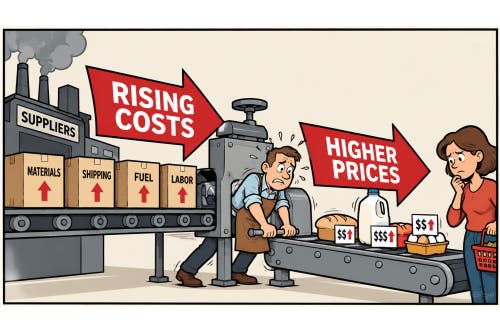
Inflation can squeeze wealth from two directions at once. Cash loses buying power, while businesses face rising costs that can eat into the profits their owners and shareholders depend on.
September’s producer price report puts that squeeze back in focus. How much can firms absorb before more of that pressure reaches customers? And what protects savings while that contest plays out?
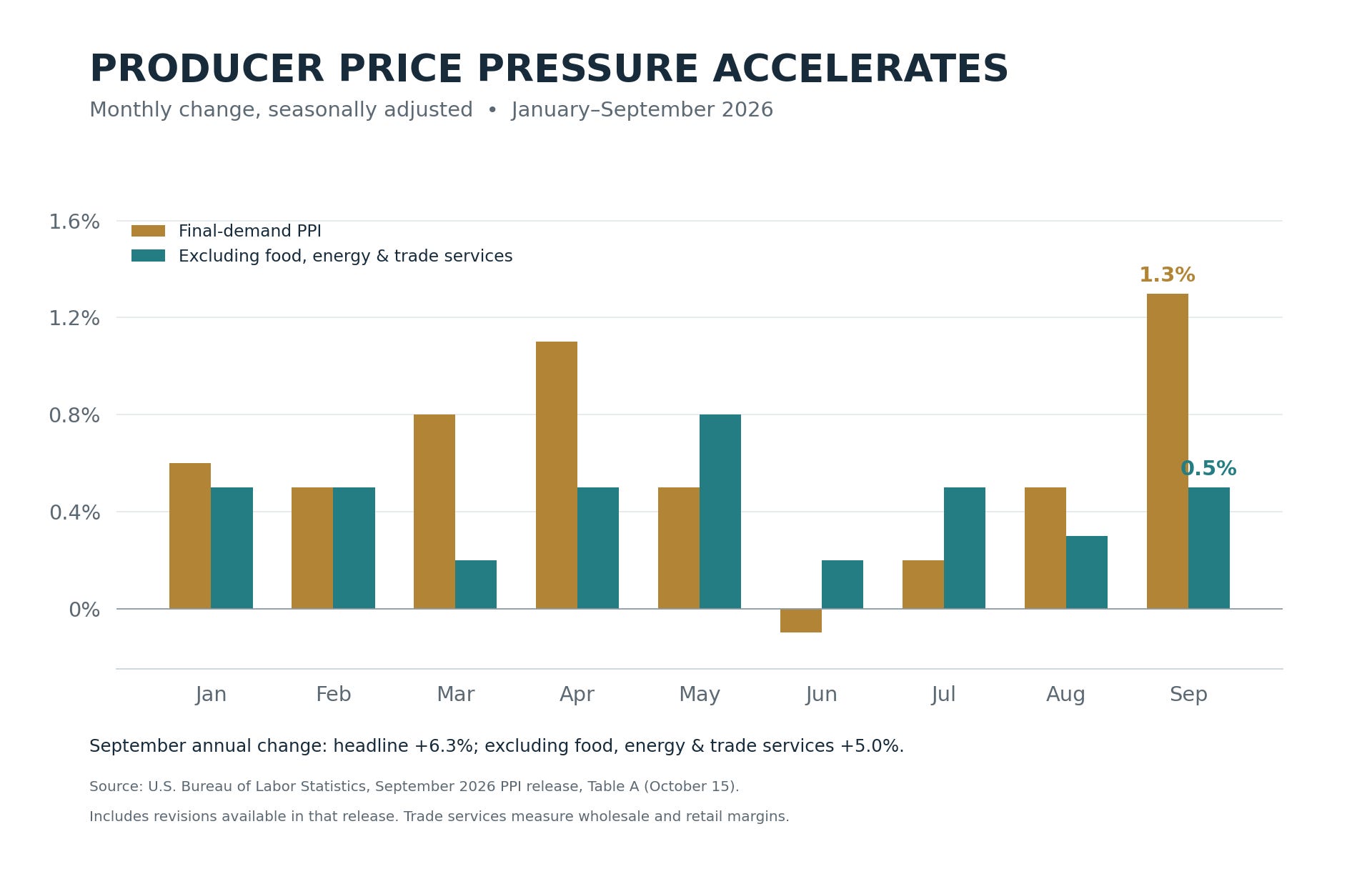
The Producer Price Index rose 1.3% in September, its biggest monthly gain since March 2022. Prices paid to U.S. producers were 6.3% above a year earlier, the Bureau of Labor Statistics reported.
THE PRESSURE BENEATH ENERGY
Energy drove much of the headline increase. But excluding food, energy, and trade services, prices still rose 0.5% during the month and 5% over the year.
That measure strips out some price swings and the margins earned on goods sold by stores and wholesalers. It suggests that cheaper fuel alone would not resolve all the pressure.
Transportation and warehousing service prices rose 3.4% in September. Those charges can spread through supply chains. Even firms that buy little fuel can feel the effects.
Passing costs along can preserve a firm’s profit per sale, but customers may buy less. Absorbing them can protect sales while reducing earnings. Strong demand and ways to cut waste can ease the squeeze. But firms cannot count on either.
Owning businesses does not shield wealth from every rise in costs. The power to raise prices without losing customers becomes crucial.
SLOWER INFLATION LEAVES A HIGHER BILL
Producer prices are not a forecast of consumer inflation. The measures cover different purchases, and cost increases do not pass through dollar for dollar.
Even if price growth slows, however, the higher price level remains unless prices actually fall. Income must clear that higher hurdle before buying power improves.
GOLD OFFERS ANOTHER WAY TO HOLD WEALTH
Physical gold carries no borrower’s promise to repay. It has no profit margin that higher freight costs can squeeze. Its value does not depend on a firm passing an expense to customers.
That gives it a distinct role alongside cash, stocks, and other assets. Gold can fall in price, and its response to inflation also depends on interest rates, currencies, and investor demand. Holding a mix of assets spreads those risks.
Watch whether price growth outside energy eases. Watch, too, for firms that struggle to pass costs along. Persistent pressure would leave savers facing erosion in cash and strain on earnings.
September’s report adds to the case for holding some gold. Its value depends on neither a fixed dollar payment nor the profits a business can earn.
Posting in:
 byUnited States Gold Bureau