
Gold miners have taken a beating, and an unusual signal suggests a rebound deserves attention. That does not mean investors need to swap their bullion for mining shares.
The more useful question is whether the two holdings can serve different jobs. Bullion offers exposure to the metal. Miners add the chance of larger gains when their profits grow—and larger losses when business conditions turn against them.
A Washout With A Limited History
On October 19, just 8% of stocks in the VanEck Gold Miners ETF (GDX) were above their 50-day moving averages, according to SentimenTrader. That share had fallen from more than 90% in 21 sessions.
Its published research summary identified 10 completed historical precedents. Eight were followed by first-month gains, with an average return of 5.5% across the sample.
That is a reason to investigate, not a promise. Ten cases make a small sample, and the signal is dated October 19—not a fresh reading for this week.
The later record was less reassuring. Only four of those precedents gained over trading days 21 through 63. A short rebound and a lasting recovery are different outcomes.
Miners Can Earn Their Place
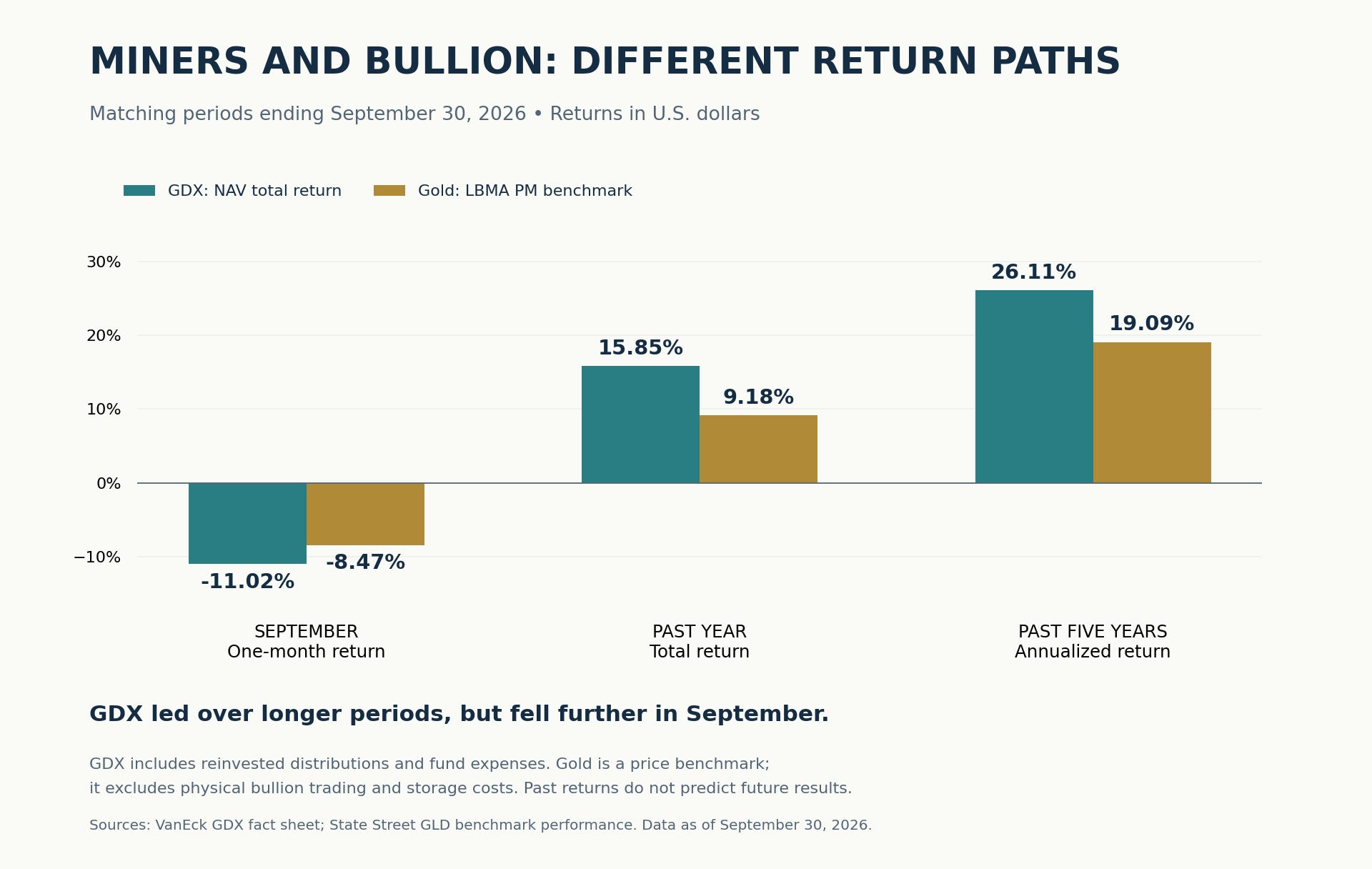
Recent return history shows why investors accept the added risks. Through September 30, GDX’s five-year annualized NAV total return was 26.11%, versus 19.09% for the gold-price benchmark published by State Street.
Those figures include reinvested distributions for GDX and reflect fund expenses. The gold benchmark excludes the costs of buying and holding physical bullion.
When gold rises faster than a miner’s costs, profits can expand faster than the metal’s price. But fuel, labor, capital spending and mine disruptions can squeeze that benefit. Our earlier streaming-versus-mining comparison explored how those costs reach investors.
The breadth signal measures price weakness; it does not prove that the underlying businesses are bargains.
Room For Both
An investor could hold bullion for direct metal exposure while using a smaller mining position to pursue operating growth or a rebound. The size of that position should reflect the extra business and stock-market risks.
Holding both still concentrates exposure to gold. Bullion can fall alongside miners, and combining them does not remove commodity risk.
For the rebound case, watch whether more mining shares regain their moving averages and hold subsequent pullbacks. A recovery carried by only a few large stocks would offer weaker confirmation.
The historical setup gives miners a place on the watchlist. Bullion can remain part of the plan while investors wait for the stocks to earn more confidence.
Posting in:
 byUnited States Gold Bureau