
Uranium’s long-term contract price has climbed, but investors can still buy one physical uranium fund below the stated value of its holdings. That gap creates an opportunity without requiring a fresh surge in fuel prices.
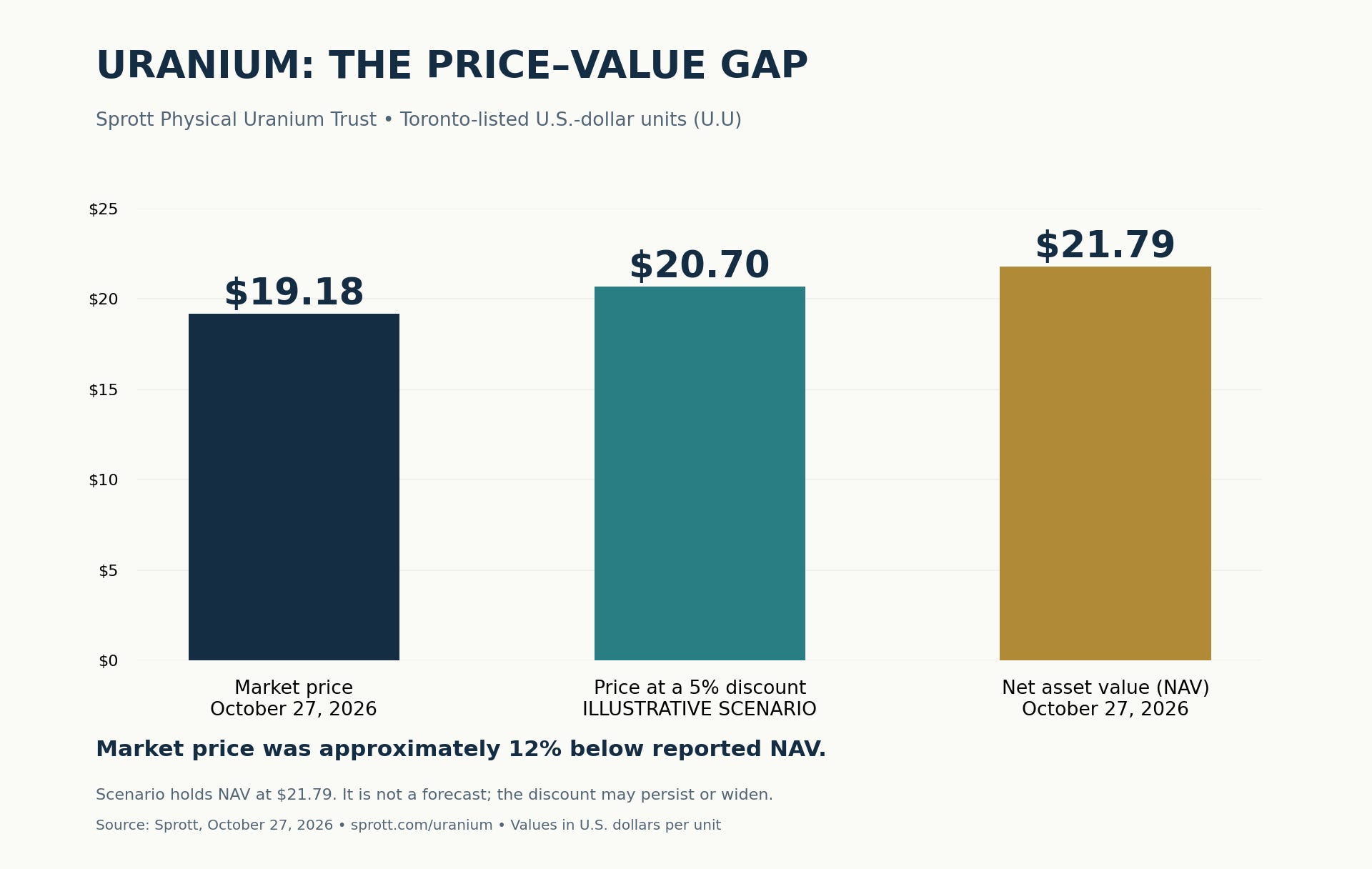
On Oct. 27, Sprott Physical Uranium Trust (TSX.U) reported net asset value of $21.79 per unit. Its U.S.-dollar units traded at $19.18 in Toronto, a discount of almost 12%.
For uranium bulls, the appeal is exposure to the fuel plus potential gains if that discount narrows. The investment case rests on both markets, not simply the nuclear power growth story.
Contract Strength, Market Weakness
Cameco’s industry data show long-term uranium prices rose from $86.50 per pound at the end of 2025 to $96.50 in September. September’s spot reference was $89.63.
Contract prices help gauge what buyers will pay to secure future supplies. The trust’s asset value relies on spot references, so higher contract prices do not flow straight into its valuation.
Still, firm contract prices offer evidence of strength beyond the fund’s trading price. The opportunity is a possible recovery in investor demand for uranium exposure while the fuel market holds up.
That would avoid a miner’s construction and operating risks. It would retain commodity-price risk and add the risk that the fund keeps trading below asset value.
What Would Drive the Return?
At unchanged asset value, a 5% discount would put each unit near $20.70, roughly 8% above Oct. 27’s price. Closing the gap would imply about 14% upside. But those returns are not locked in. If asset value fell 10% while the discount narrowed to 5%, the unit price would be about $18.63. Investors would still lose roughly 3%, before trading costs.
The better outcome combines stable or rising uranium prices with stronger demand for the units. A sustained drop in spot prices would weaken the case even if the discount looked tempting.
A Discount Needs a Catalyst
The trust is non-redeemable. Investors cannot force a payout at asset value, so there is no assured date for the gap to close. Renewed buying interest could narrow it, while continued weak demand could leave it unchanged or wider. Its reported annual expense ratio of 0.71% also weighs on returns over time.
For patient uranium bulls, the discount offers a measurable starting advantage. The purchase makes sense only if they also back the fuel outlook and can tolerate a gap that lasts.
Posting in:
 byUnited States Gold Bureau