
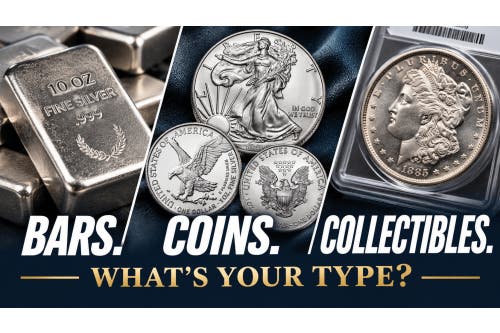
Imagine you're comparing three different forms of physical silver: a bag of circulated pre-1965 U.S. silver quarters and dimes, a 10-ounce silver bar, and a professionally graded Morgan silver dollar.
You only have enough cash for one.
Which do you choose?
At first glance, all three seem like versions of the same investment. After all, each contains silver, each is a physical asset, and each offers exposure to the precious metal.
But your answer reveals something important.
Different silver investors approach the market with different goals. Some want the most silver possible for their money. Others prefer smaller, recognizable pieces they can accumulate over time. And some are drawn to coins with collector appeal that may be worth more than their silver content alone.
That's why we call this The Silver Signal. It reveals that many investors fall into one of three broad categories.
The Ounce Counter
If your first instinct was to grab the silver bar, you're probably focused on one thing: maximizing your exposure to the metal itself. This investor wants as much silver as possible for every dollar spent. Premiums matter, cost per ounce matter, but collectability usually doesn't.
For the “Ounce Counter,” the most important question is:
"How much silver am I getting for my money?"
A silver bar may not have the historical appeal of an old coin or the rarity of a collectible piece, but it offers a straightforward way to accumulate silver.
Purity also matters. While many older coins contain 90% silver, modern bullion bars and many bullion coins are typically .999 fine silver, making it easy to calculate exactly how much silver is being purchased.
When silver prices rise, the Ounce Counter expects the value of those holdings to move accordingly. Rarity, history, and collector demand are secondary considerations.
The Silver Stacker
If you were drawn to the bag of old quarters and dimes, you may be a “Silver Stacker.”
These investors often favor junk silver, also known as constitutional silver. The coins are valued primarily for their silver content rather than their collectible appeal.
Part of the attraction is familiarity. Many people recognize a Washington quarter or Mercury dime immediately. The smaller denominations also allow investors to build a position gradually. Instead of saving for a larger purchase, stackers can add to their holdings over time, one purchase at a time.
Many also enjoy owning a small piece of American history while building precious metals exposure.
The focus is on steadily accumulating silver in practical, recognizable forms, and collectability is not usually the primary goal.
The Collector Investor
If the graded Morgan dollar immediately caught your eye, you may be a “Collector Investor.”
These buyers care about silver content, but they also pay attention to rarity, condition, and demand from other collectors. A standard silver bar is generally worth little more than the value of its silver. A rare or highly graded Morgan dollar, however, may command a premium because collectors place additional value on its scarcity and condition.
For the Collector Investor, silver prices are only part of the story.
A coin may increase in value because silver rises, because collector demand grows, or because examples in a particular grade become harder to find.
Their guiding question is:
"Can rarity create value beyond the metal itself?"
The Real Lesson
Unlike most tests, there is no wrong answer.
A silver bar may be ideal for investors seeking maximum exposure to the metal. Junk silver can appeal to buyers who value flexibility, familiarity, and smaller denominations. Collectible coins offer a combination of precious metals ownership and numismatic appeal.
The key is understanding why you're buying.
At the end of the day, a silver bar, a bag of old quarters, and a graded Morgan dollar are not competing products.
They are different tools designed for different investors.
The question is not which one is best.
It's which one is best for you.
Posting in:
 byUnited States Gold Bureau