
Fifield, a small town of 128 in Australia’s New South Wales, sits near a mine site that has caught the Pentagon’s attention. The draw is scandium, a rare-earth metal that makes aluminum stronger and lighter -- a useful combination for military aircraft. And just a little goes a long way.
The Pentagon’s interest is in securing another source outside China. The Australian mine could provide the raw material, but the U.S. would still need a refinery to turn it into forms manufacturers can use.
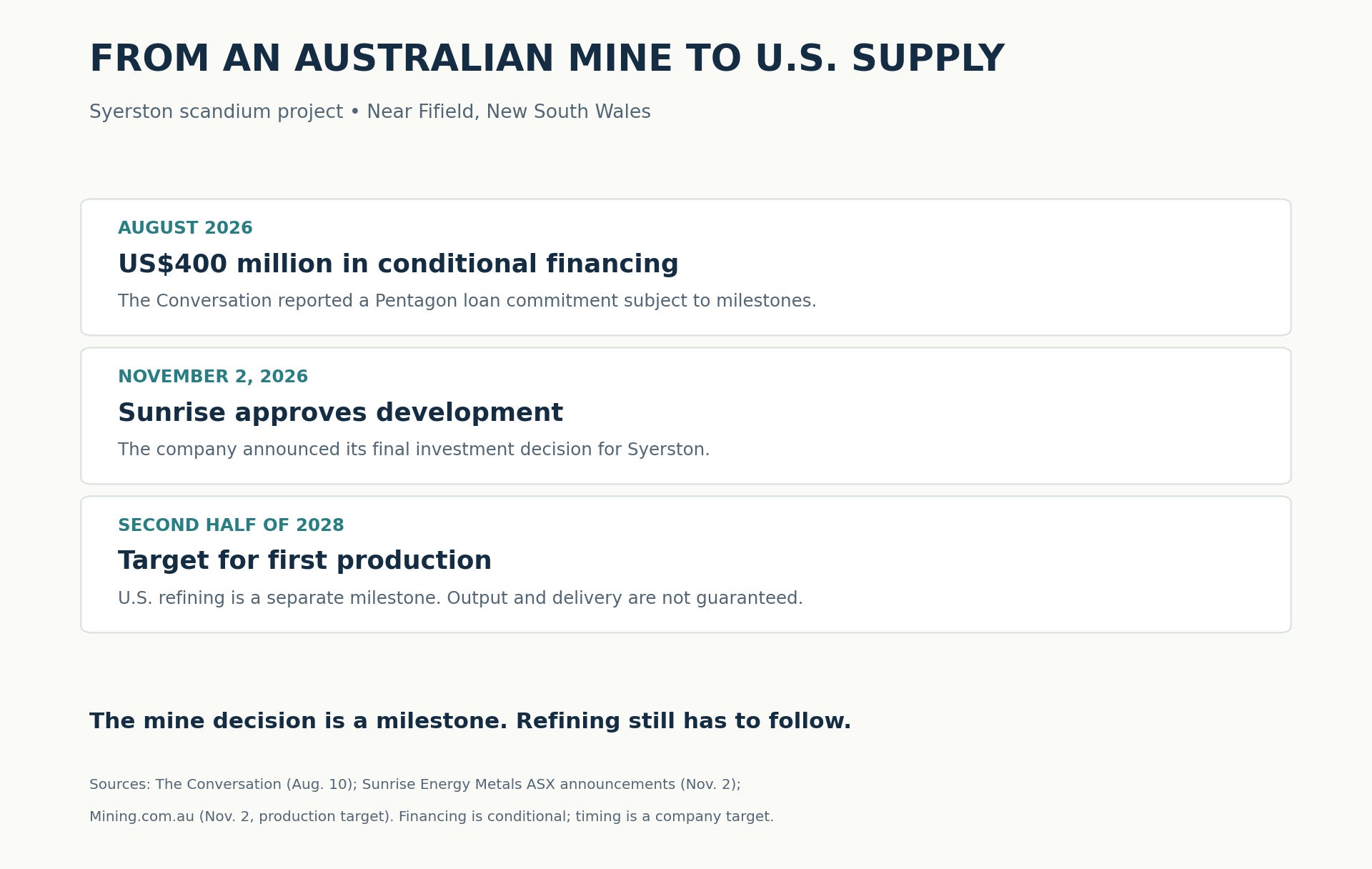
On November 2, Sunrise Energy Metals (SREMF) announced its final investment decision for the nearby Syerston project. The board’s approval moves the mine toward development. For the U.S., it brings a potential new source of scandium closer, though getting it from the ground into American factories will take more work.
Why the Pentagon Cares
Scandium has uses in aerospace alloys and in some fuel cells. Supply is harder to expand than those uses might suggest. Producers have typically recovered it while processing other metals. That ties supply to decisions about what else is worth mining or refining.
Syerston is different. Sunrise plans to produce scandium as the main product. If the mine works as planned, it could give buyers a source outside China without relying on another metal’s production plans.
That helps explain why the Pentagon is willing to lend money to a mine overseas. In August, the Pentagon offered Sunrise a $400 million loan. The deal is worth nearly $1 billion when public and private capital are counted together, and gives the Pentagon the right of first offer for Sunrise’s output.
The Mine Is Only Half the Story
The plan starts with a mine in Australia. In the U.S., plants would turn the mine’s output into metal and use 3D printing to make parts. A mine alone won’t end U.S. reliance on foreign processors. Sunrise still has to meet the loan terms before the deal can close. It is targeting first production in the second half of 2028.
The next milestones are whether Sunrise meets the financing terms and whether the U.S. refinery moves forward. The project also has to make economic sense if lower-priced supply returns to the market.
The board vote gives the U.S. a more credible path to another source of scandium. The better test will be whether the mine and refinery advance together. That’s what could turn a project in a tiny Australian town into a supply chain American manufacturers can use.
Posting in:
 byUnited States Gold Bureau