
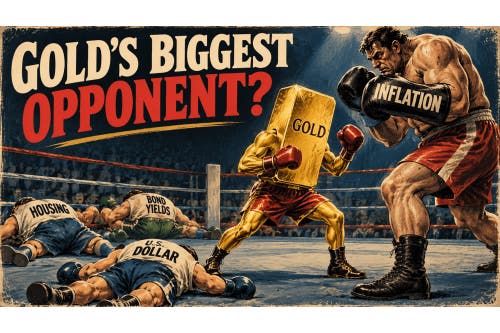
Gold got some of the economic news it needed Tuesday. Housing starts fell short of forecasts, Treasury yields declined, and the dollar weakened. Yet gold prices moved lower.
That was not the response investors might have expected.
In Monday's look at five events that could move gold, we identified slower growth and falling yields as a possible path to higher prices. Tuesday put that theory to the test.
HOUSING DELIVERED THE WEAKNESS
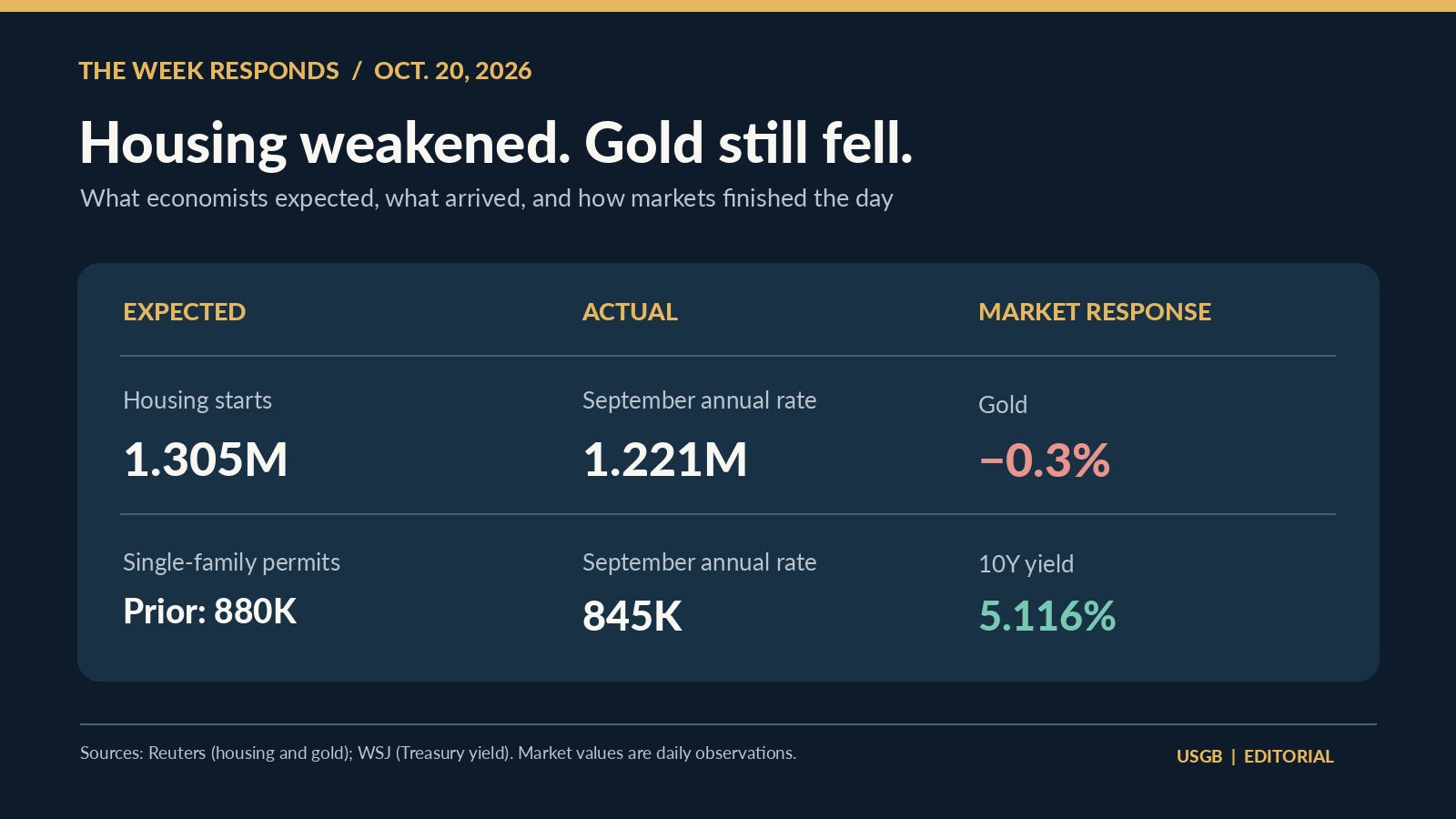
September housing starts fell 5.2% to an annual rate of 1.221 million. Economists expected about 1.3 million. August's figure was revised higher to 1.288 million.
Single-family permits fell 4% to 845,000, their lowest level in three-and-a-half years. With mortgage rates near 7.4%, the report showed how higher borrowing costs are slowing construction.
Bond traders took notice. The 10-year Treasury yield slipped to about 5.12%, while the dollar index fell 0.25%.
Both moves tend to favor gold, which pays no interest and often benefits from a weaker dollar.
GOLD DIDN'T FOLLOW THE SCRIPT
December gold futures instead closed down 0.4% at $4,122.40 an ounce. Silver moved the other way, gaining 1.3% to $57.71.
Gold was already under pressure before the housing report. The weak data did not reverse that trend. Oil prices may help explain why. Crude briefly surged above $110 a barrel Tuesday before pulling back on hopes of easing tensions with Iran. Brent was pushing toward that level again on Wednesday after reports that the U.S. and Iran are close to a deal were labeled false.
Even after that retreat, high energy costs remain a threat to inflation. That could keep the Federal Reserve from easing its policy stance, despite signs of weaker growth.
THE NEXT TESTS STILL MATTER
The Fed's communications blackout leaves investors to judge these signals without fresh guidance from policymakers.
Thursday's jobless claims will show whether weakness is spreading beyond housing. Friday's business surveys will test demand and price pressure. Consumer inflation expectations will offer another clue.
Gold's bullish case would gain strength if those reports point to slower growth, lower yields, and easing inflation pressure. Rising inflation expectations or renewed gains in yields would challenge it.
Tuesday showed that weaker growth is only part of the picture. For gold to rally, investors may also need confidence that inflation is coming under control.
Posting in:
 byUnited States Gold Bureau