

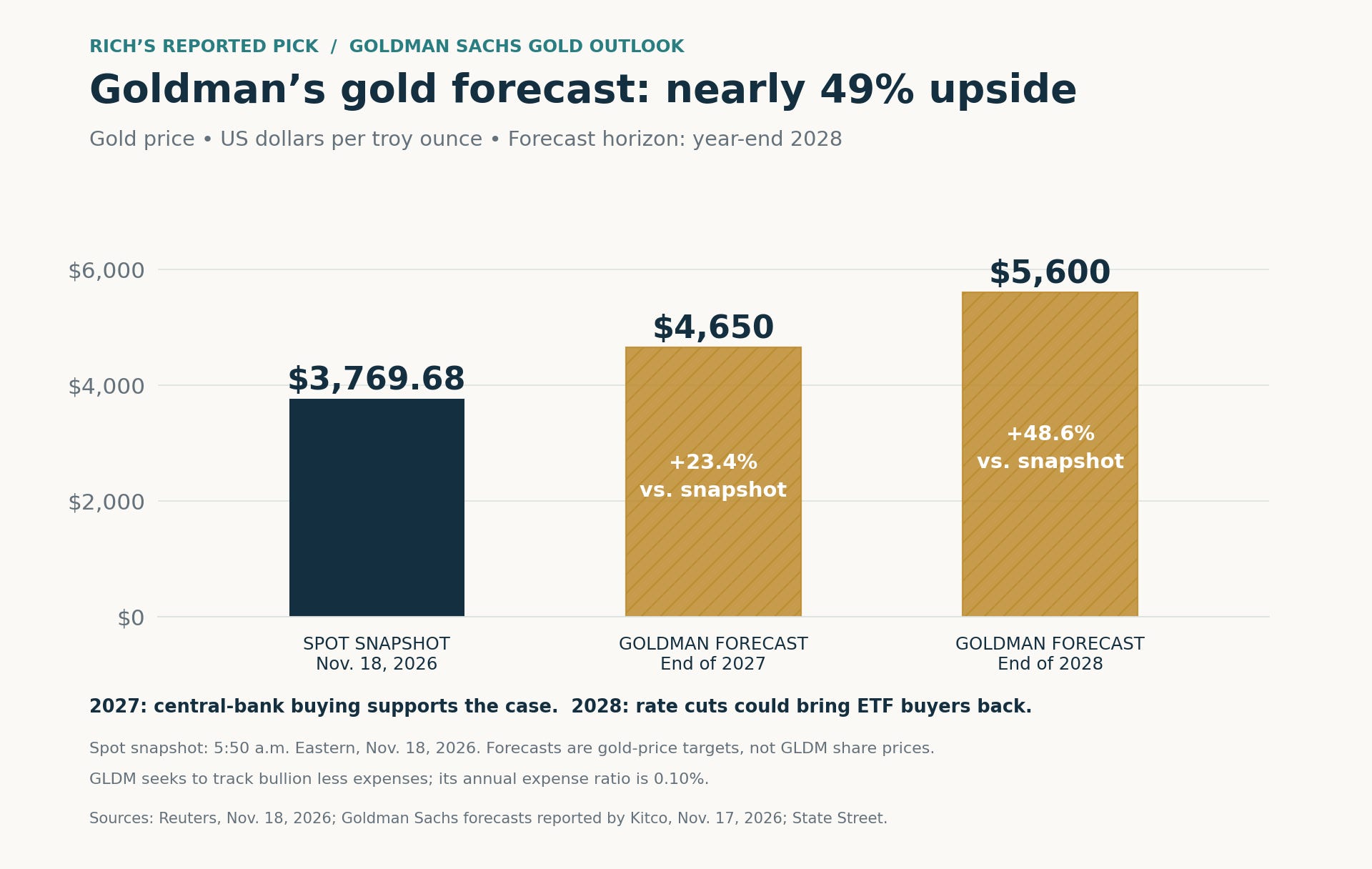
Gold bulls could use a little good news. With bullion below $3,800 and trading at its lowest level in more than a year, Goldman Sachs has supplied a number worth watching: $5,600.
That would represent a gain of roughly 49% from the $3,769.68 spot quote reported early on November 18. Goldman’s target is for the end of 2028, giving the recovery about two years to unfold.
The bank’s case offers investors more than a distant price target. It describes two groups of buyers whose demand could strengthen at different points along the way.
Central Banks Buy First
According to Kitco’s November 17 report, Goldman expects gold to reach $4,650 by the end of 2027. That is roughly 23% above the November 18 quote.
Its forecast assumes central banks buy an average of 60 tonnes a month through 2028, compared with 17 tonnes before 2022.
Reserve buyers can keep adding gold while private investors focus on the next interest-rate move. Their purchases could help sustain demand through a period when higher rates and a strong dollar weigh on prices.
Goldman expects further turbulence first. Its economists forecast rate increases in December and March.
Figure 1. Down Detector snapshot showing Chase, Bank of America, Microsoft Outlook, YouTube, Wells Fargo, and United Airlines among the most reported services at that moment.
The Next Buyers Could Matter More
The second stage depends on lower rates drawing investors back to gold funds.
Goldman expects four quarter-point cuts between November 2027 and September 2028. That shift could help revive demand from investors who have favored interest-paying assets.
There is already a revealing split in fund flows. The World Gold Council reported that European gold funds attracted $1.8 billion in October, while North American funds lost $512 million.
European buyers were already stepping in. A sustained return of U.S. inflows would broaden that demand and give investors a useful way to judge the recovery thesis.
A Way to Invest in the Comeback
SPDR Gold MiniShares (GLDM) offers exposure to bullion through a brokerage account. The fund seeks to track gold’s price less expenses, with an annual expense ratio of 0.10%, or about $10 per $10,000 invested.
Its appeal here is straightforward: investors can participate in a gold recovery without also relying on a miner’s production, costs, or management.
The biggest threat is a longer tightening cycle that delays returning fund demand. Investors can watch central-bank purchases and U.S. ETF flows for signs the case is developing.
Goldman’s forecast gives patient bulls a substantial prize to consider. The buying trends will tell us whether gold is moving toward it.
Posting in:
 byUnited States Gold Bureau