
Gold got two seemingly helpful headlines this week: retail sales slowed, and industrial output fell. Yet bullion slid to its lowest level in more than a year.
The problem was beneath the surface. Neither report gave markets a clear reason to abandon bets on higher interest rates. Meanwhile, fresh import-price data showed that inflation pressure was still working through the economy.
Our Monday watch list focused on whether spending and factory reports would change the rate outlook. So far, the details have made that harder.
Shoppers Slowed, But Kept Spending
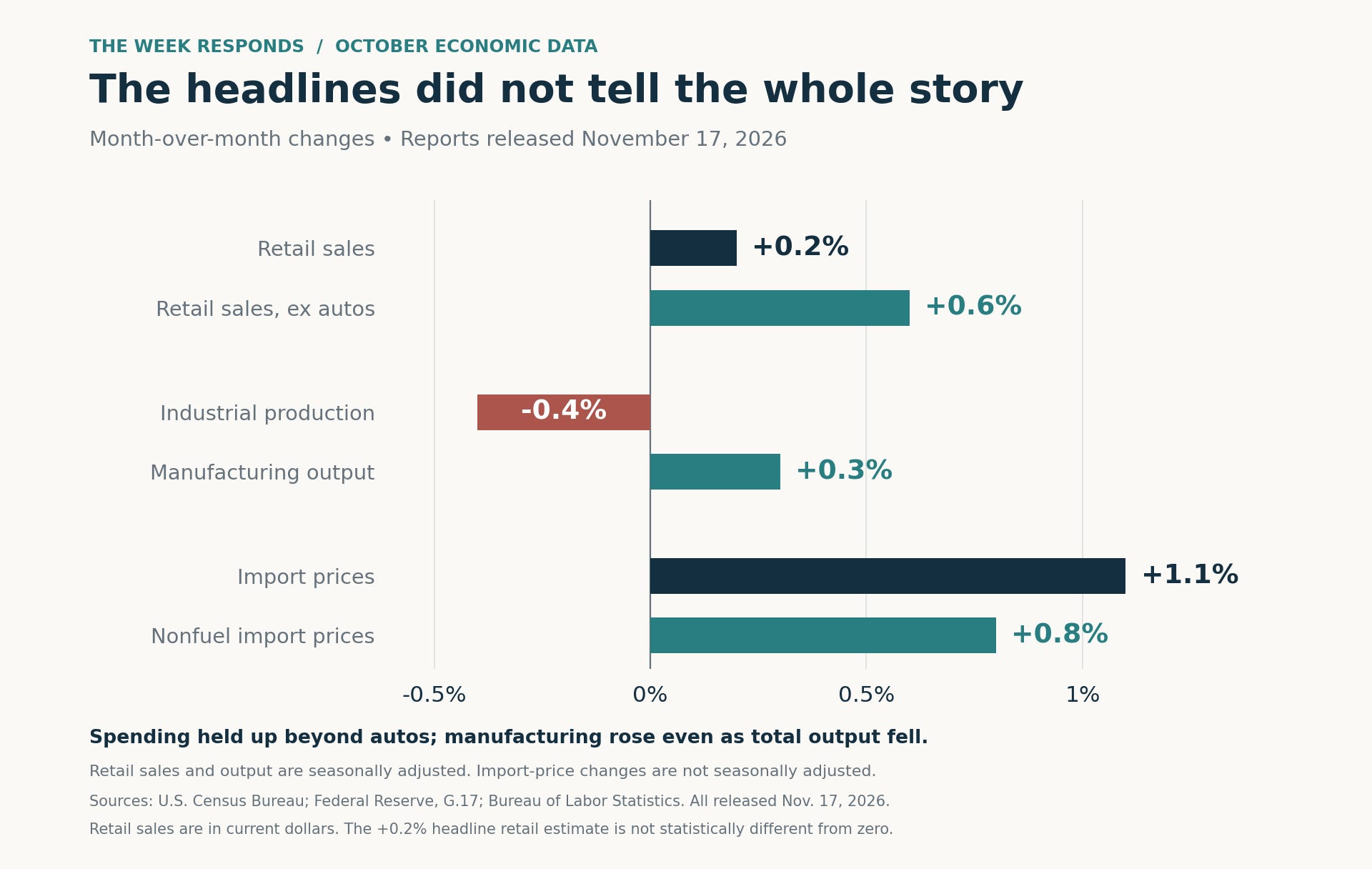
October retail sales rose 0.2%, down from September’s 0.8% gain. The headline matched economists’ expectations.
But the narrower group of sales used to help calculate economic growth rose 0.6%. That measure leaves out autos, gasoline, building materials, and food services.
Consumers had eased off the accelerator. They had not slammed on the brakes. And because sales are measured in dollars, rising prices can lift spending without a matching increase in goods purchased.
For gold, the report offered little evidence that demand was cooling fast enough to change the Fed’s course.
Factories Told a Mixed Story
The Federal Reserve reported that industrial output fell 0.4% in October. That looked weak beside expectations for a modest gain.
Yet utilities drove much of the decline, with output falling 4.3%. Manufacturing rose 0.3%, though it slipped 0.1% when autos and parts were excluded.
That leaves a softer factory picture than the manufacturing headline suggests, but a firmer one than the total output decline implies.
Inflation brought another complication. Import prices rose 1.1%, including a 0.8% increase outside fuel. Price pressure extended beyond energy.
Gold Followed the Rate Outlook
Reuters reported spot gold at $3,769.68 an ounce at 5:50 a.m. Eastern on November 18, down 2.1%. The dollar hovered near a 19-month high as expectations for further Fed tightening weighed on bullion.
That reaction shows which concern held the upper hand: inflation and the policy response outweighed the softer growth headlines.
At the time this report was compiled, Wednesday afternoon’s Fed minutes and Thursday’s factory survey and jobless claims were still pending.
The next useful signal is whether weaker demand begins to cool prices as well. Gold’s longer-term case can survive a rough stretch, but a lasting rebound needs more than a disappointing headline. It needs evidence that shifts the outlook for rates and the dollar.
Posting in:
 byUnited States Gold Bureau