
Microsoft, the FAA, and Chase Lost Access First
In just four short days, Microsoft lost access to more than 80% of its networking gateway servers, the FAA grounded flights nationwide, and Chase delayed customer transactions.
Microsoft’s preliminary report, the FAA’s explanation, and Chase’s statement describe three separate technical failures and reports claim it’s not one coordinated attack… yet.
Yet, we first saw one of the largest forms of business communication go down in Outlook, next intercontinental travel was blocked, and now banking has been restricted.
I smell something fishy going on.
But the outages exposed a weakness that reaches beyond servers and air traffic. A digital balance is useful only while the system grants you access to it. And a dollar can remain in your account but as we’ve seen, that doesn’t always equate to being able to pay your family’s bills.
The danger isn’t only a dramatic default. It’s the slow erosion of personal freedoms that arrive before the writing is on the wall.
Three Technical Failures Put the Debt Story in Plain English
The facts are straightforward but real read on what is going to happen is not as clear.
Microsoft’s report says a latent software defect, a failover event, and a 14% capacity reduction left more than 80% of its gateway servers unresponsive.
The FAA grounded flights after communications instability affected multiple air-traffic systems. Reuters reported nearly 10,000 canceled flights and said there was no evidence of a cyberattack at the time.
Chase said a software bug in on-premises hardware delayed transactions. The bank said the issue wasn’t cyber-related or systemic.
The same distinction matters in the debt debate. Elon Musk’s warning that the United States could face bankruptcy and national decline is an opinion, not an established forecast. Or does he know something we all don’t?
The reported comments still point toward a more durable question: does household wealth need a formal default to lose ground?
No. Currency erosion can do the work quietly. All while you’re going to work and investing in the forms that your standard financial advisor is telling you.
The snapshot in the story — Down Detector captured this user-reported cluster on Nov. 16, 2026, at 7:18 PM. It shows reported issues widespread issues that users were facing across the major banking and software sectors.
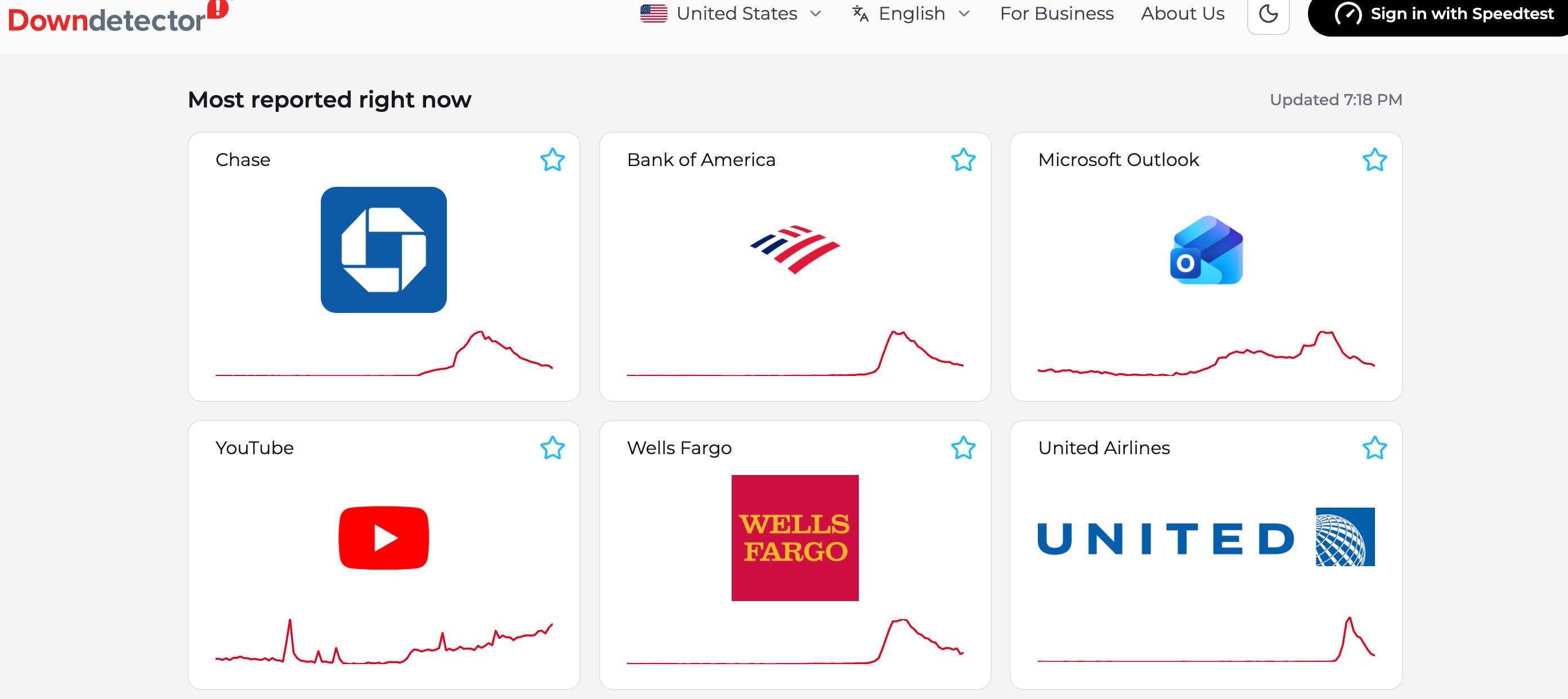
Figure 1. Down Detector snapshot showing Chase, Bank of America, Microsoft Outlook, YouTube, Wells Fargo, and United Airlines among the most reported services at that moment.
A Digital Claim Still Needs a Door to Open
Here’s the thing.
A Microsoft account can exist while the user can’t reach email or files. A traveler can hold a valid ticket while the air-traffic system can’t safely release the flight. A bank customer can see a balance while a transaction refuses to settle. Are you seeing the pattern? These are all just promises to access, they aren’t direct ownership of the asset or information itself. You are simply just a participant to this huge game.
The claim exists. The access layer fails.
Debt works differently, but the pressure can look similar. A government can keep paying its bills while each unit of currency still buys less. The account balance remains intact in nominal terms. The purchasing power does not.
The strongest counterargument is obvious. These outages were temporary. Chase didn’t fail as a bank. Microsoft restored service. The FAA reopened the airspace. The United States hasn’t defaulted.
Agreed.
But the conclusion doesn’t require panic, insolvency, or coordination. It requires simply noticing the dependency on someone else. Someone you can’t call directly or speak to about issues like the one we saw yesterday. A claim behind a locked door may still be valid, but it isn’t the same as control in your hand. A dollar that buys less is still a dollar, but it represents less of what you worked to earn.
March 1933 Showed What Access Can Become
The closest historical parallel is the U.S. bank holiday of March 1933. The government suspended banking transactions while officials decided which institutions could reopen. Deposits didn’t vanish, but access temporarily depended on government permission and institutional reopening.
The episode later changed the rules around gold. The Gold Reserve Act of 1934 changed the official gold price from $20.67 to $35 an ounce.
The lesson isn’t that every outage becomes confiscation. It’s that a financial claim and a directly controlled asset aren’t the same thing.
The historical record — Deposits in suspended member banks rose sharply during the period leading into the March 1933 bank holiday. The series ends in February 1933 because the March banking legislation made later data incomparable.
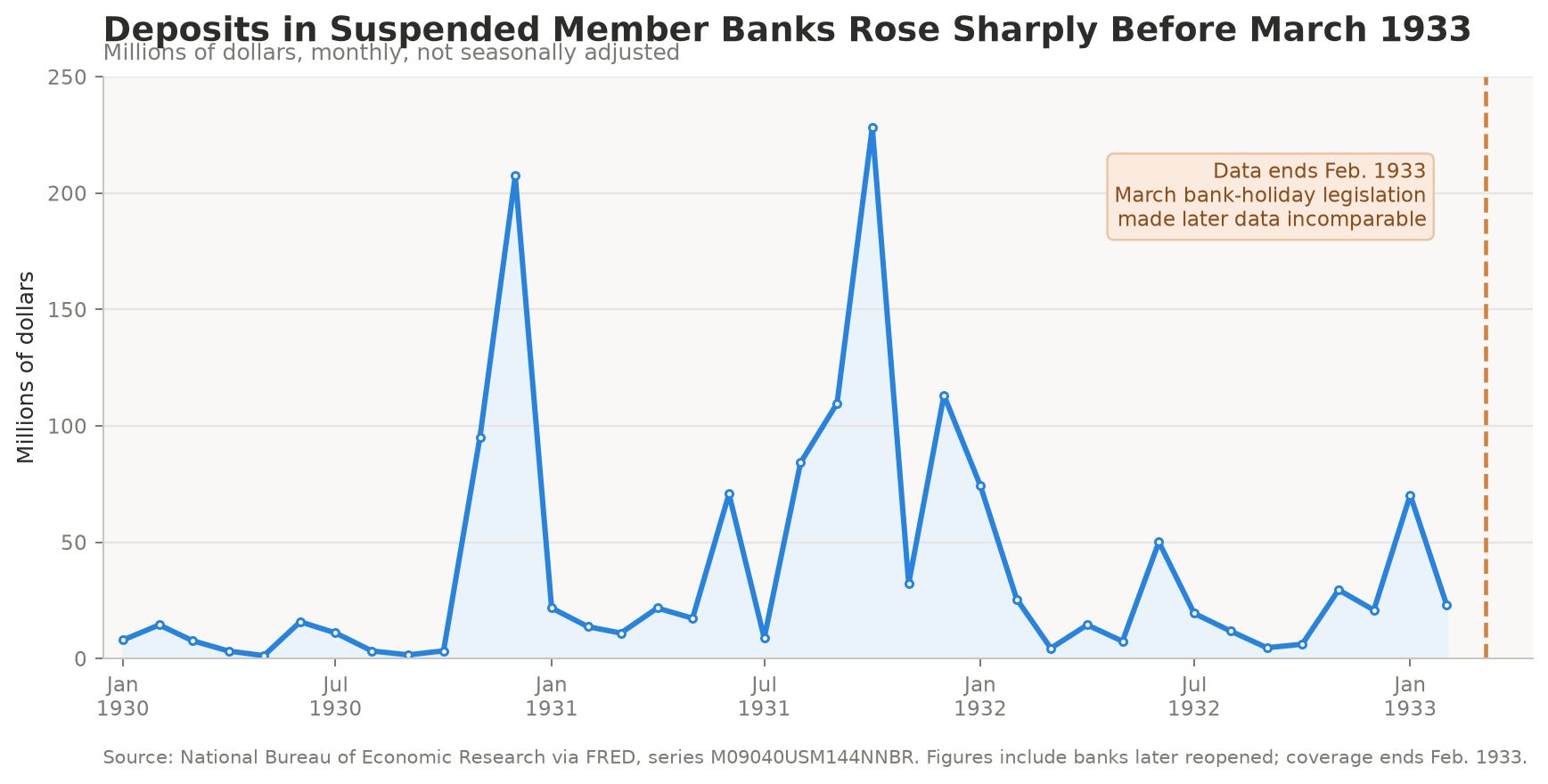
Figure 2. NBER Macrohistory data via FRED. This is contextual evidence of pre-holiday banking stress, not a direct measurement of the holiday’s post-event impact.
Keep Digital Money for Spending. Own What the Issuer Can't Print.
Keep digital money for payroll, bills, and daily transactions. Digital systems are useful. They’re also dependent on servers, networks, applications, and institutions.
A portion of your long-term wealth should sit outside that access chain. Each member of your household should keep a few hundred dollars in cash on hand at any given time. This way, you have a “break glass in case of emergency” plan to pay any bills that come due during a short phase like yesterday.
If you want to store any kind of wealth beyond a few thousand dollars.
That means holding physical gold directly: physical, allocated, delivered, or stored in a vault and in your own name. Not an account balance that depends on a platform responding. Not another promise denominated in dollars. Not a forecast dressed up as certainty.
Gold doesn’t eliminate risk. It does give the balance sheet a different kind of asset—one no single issuer can create by decree.
The Outages Were the Receipt
Three technical failures don’t prove a coordinated event… necessarily. They do provide a tell or signal that these crises are possible.
When the access layer fails, the definition of ownership gets clearer. When currency erodes, the definition of value gets clearer.
Keep digital money where speed matters. Own some wealth in a form that doesn’t need a server, app, or institution to acknowledge that it belongs to you.
Own what lasts.
Posting in:
 byUnited States Gold Bureau