
A uranium miner can deliver more fuel than it produces. The question for investors is where the extra pounds come from and what the company pays for them.
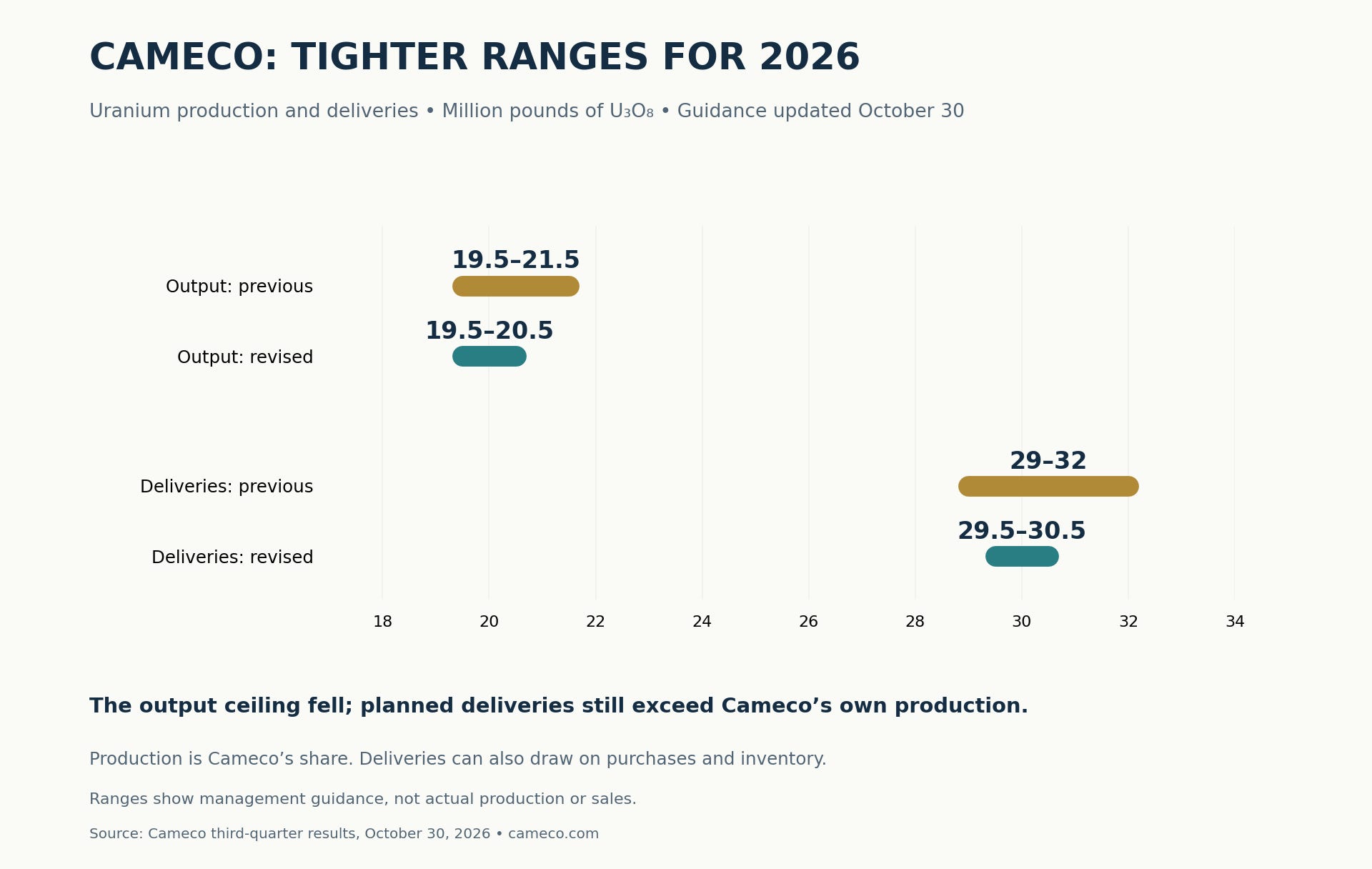
That’s the story behind the latest results from Cameco (CCJ). The company trimmed the top end of its 2026 uranium production forecast, yet it still expects deliveries to run well ahead of its own output. That gap is part of how Cameco runs its business. It also helps explain why strong demand for nuclear fuel doesn’t always translate into stronger profits in the same quarter.
A Lower Ceiling for Production
In its Oct. 30 earnings report, Cameco put its share of 2026 uranium production at 19.5 million to 20.5 million pounds. The low end stayed put, while the high end fell by 1 million pounds. The company also tightened its delivery forecast to 29.5 million to 30.5 million pounds, raising the low end and lowering the high end.
A planned maintenance shutdown at the Key Lake mill ran longer than in prior years. Cameco said the work contributed to lower production and higher costs in the third quarter. It was commissioning the new equipment when it reported results. That gives investors a concrete milestone to watch: how smoothly the mill returns to normal operations.
Where the Extra Pounds Come From
Cameco delivered 5.6 million pounds of uranium in the quarter and its share of production was 3.5 million pounds. It also bought 1.8 million pounds and ended September with 8.5 million pounds in inventory.
That inventory gives Cameco room to manage the timing of mine output and customer deliveries. At the end of September, Cameco’s uranium inventory had an average cost of C58.37 per pound. The uranium it bought during the quarter averaged C83.78 per pound. Those costs don’t tell us what Cameco earned on any one sale. But they show why it pays to watch where the company gets its fuel.
What Investors Should Watch Next
Cameco has contracts for average annual deliveries of more than 28 million pounds over the next five years. That gives it visibility into future sales volumes, though the price it earns depends on the terms of those deals.
The next report should help answer two questions: Is Key Lake back on track, and what is Cameco paying to fill the gap between output and deliveries? The contract book shows that customers want the fuel. Those operating details will help show how much Cameco can earn supplying it.
Gold Is the Core but Silver Brings the Velocity
Physical gold remains the reserve asset. Silver adds leverage to the same monetary move. It is cheaper, more volatile, and more sensitive to renewed demand. That combination can create a sharp near-term opportunity when the dollar weakens and buyers return to the metals complex. The rally was real. The next question is how far the catch-up can run.
Posting in:
 byUnited States Gold Bureau