
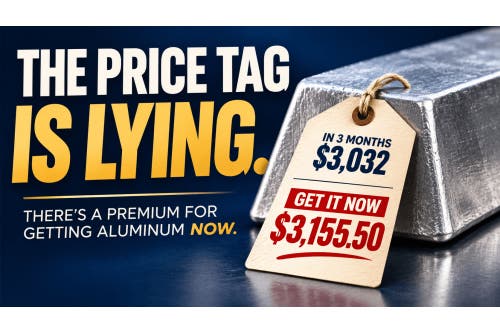
Imagine a contractor offering a lower price if you can wait three months. The work has not changed. What costs extra is getting it done now.
Aluminum buyers face a version of that choice. Metal for prompt delivery on the London Metal Exchange costs more than metal due in three months. That gap has widened, even as the cash price pulled back from its midweek level.
For real-asset investors, the lesson is useful: a falling headline price can still mask a tight market for supplies buyers need right away.
The Cost of Getting Metal Now
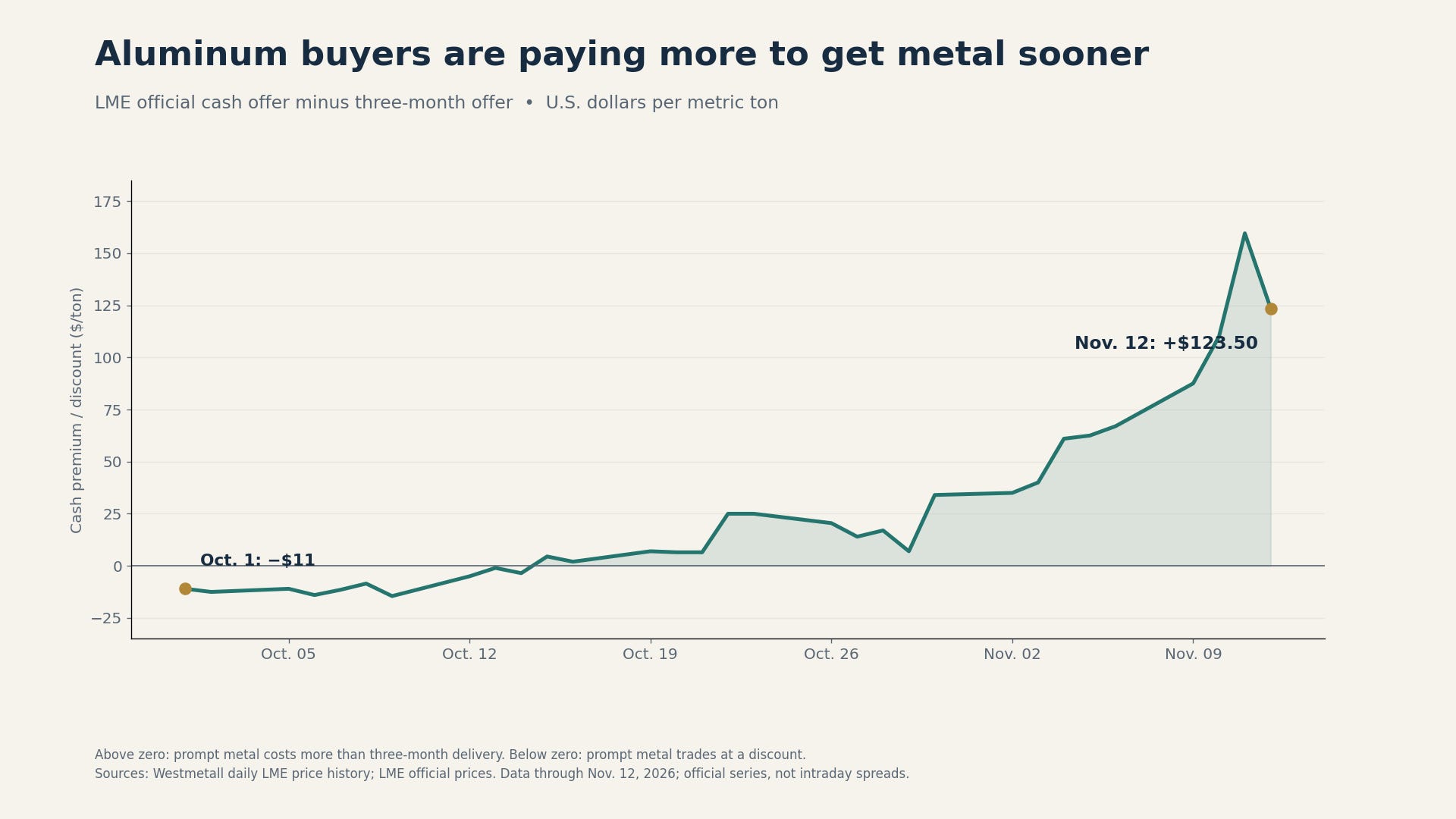
On Nov. 12, the LME’s official cash offer was $3,155.50 per metric ton. The three-month offer was $3,032. That left buyers paying an extra $123.50 for prompt delivery.
On Nov. 9, the same comparison showed an $87.50 premium. On Oct. 1, cash metal had traded at an $11 discount, according to Westmetall’s historical price table.
Traders call a cash premium “backwardation.” In plain English, the market is putting a higher value on getting metal sooner.
The cash price fell from $3,223.50 on Nov.11 to $3,155.50 the next day. Yet prompt delivery still carried a sizable premium. The outright price and the delivery gap tell different parts of the story.
Why Supply Is Under Pressure
Reuters reported on Nov. 12 that tight exchange stocks were driving the squeeze. It also noted that one entity held 30% to 39% of aluminum warrants, the documents tied to stored metal.
Westmetall’s table shows total LME stocks falling from 240,625 metric tons on Oct. 1 to 226,350 on Nov. 12, a decline of nearly 6%.
That pool covers exchange warehouses, rather than every ton available worldwide. Still, less metal in that pool can make prompt delivery more valuable to traders who need it.
What Investors Should Watch
This is also a useful lens for precious metals. A squeeze in one delivery market can matter without proving that all available supply is running out. Location and timing help explain the gap.
Follow the cash premium alongside stocks. A smaller premium and rebuilding inventories would suggest that pressure is easing. A persistent gap would show that immediate supply remains prized.
For investors studying miners, this adds a useful question: can the company actually sell into that tight market? Contract terms, delivery costs, and production timing affect what it earns. The best opportunity depends on who can supply the metal buyers need, when they need it.
Posting in:
 byUnited States Gold Bureau