
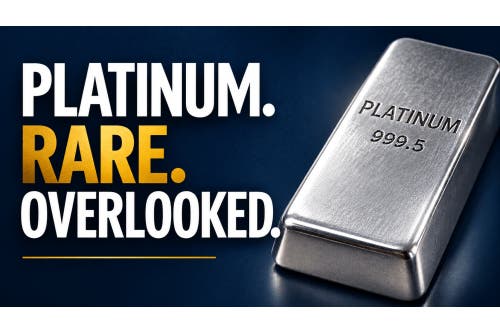
Whether it's sports cards, fine art, real estate, or precious metals, rarity is often associated with value.
For example, thousands of Dak Prescott cards may exist from a particular set. But a card numbered one-of-one is exactly what it sounds like: the only one in existence. If a collector wants that specific card of the Dallas Cowboys quarterback, supply is effectively fixed at one.
Typically, that’s how rare assets work. The scarcer an item becomes, the more valuable it can be.
And that makes platinum an interesting puzzle for investors.
Despite being one of the world's rarest major commodities, platinum often trades in the shadow of gold and attracts far less attention from investors. In fact, the world typically mines more than 15 times as much gold as platinum each year, despite gold receiving far more attention from investors.
What holds it back is that it doesn't have the monetary history of gold. It doesn't have the passionate retail investor following of silver. And unlike copper, it isn't usually the first metal investors think about when discussing electrification, manufacturing, or infrastructure.
As a result, platinum often gets overlooked.
Where The Investment Case Begins
Certain markets can remain overlooked for long periods of time. However, persistent supply deficits can eventually become difficult to ignore.
The bullish case for platinum starts with a simple reality: the market has been consuming more platinum than it produces. According to the World Platinum Investment Council, platinum markets have recorded deficits from 2023 to 2025, as demand has exceeded supply. Those deficits are expected to continue for much of the remainder of the decade, putting additional pressure on already declining inventories.
Another factor working in platinum's favor is that demand comes from multiple sources. The metal is used in jewelry, automotive catalytic converters, chemical processing, petroleum refining, medical equipment, and a variety of industrial applications. Researchers are also exploring additional uses tied to hydrogen technologies and emerging AI-related infrastructure.
That diversification matters because platinum is not dependent on a single trend succeeding.
Of course, there are risks. Electric vehicles could reduce some traditional automotive demand over time. Industrial demand can also weaken during economic slowdowns. Additionally, platinum lacks the strong investment demand that often supports gold prices during periods of uncertainty.
That's one reason investors should probably avoid viewing platinum as the "next gold" or the "next silver."
It may never generate the kind of excitement that sends gold or silver soaring in a matter of months.
Instead, platinum's appeal may lie elsewhere.
For investors who already own gold, silver, energy stocks, or other hard assets, platinum offers exposure to a scarce metal with a different set of supply and demand drivers. If supply remains constrained while inventories continue to fall, the metal may have room to appreciate over time.
More importantly, it remains an asset that many investors simply aren't paying attention to.
History shows some of the most interesting investment opportunities emerge before everyone is talking about an asset, not after. Platinum may never command the same attention as gold or silver, but its combination of rarity, industrial demand, and persistent supply deficits suggests it may deserve more attention than it currently receives.
How to Invest in Platinum
Investors have several ways to gain exposure to platinum. The most direct approach is purchasing physical platinum bars or coins. Those looking for another option can purchase shares of exchange-traded funds (ETFs) such as the Aberdeen Physical Platinum Shares ETF (NYSE: PPLT), which is backed by physical platinum.
Investors can also consider platinum-producing mining companies, though that introduces company-specific risks in addition to changes in the metal's price.
Regardless of the approach, platinum is often best viewed as a complement to other portfolio holdings such as gold, silver, and energy investments rather than a standalone portfolio position. Its appeal lies in diversification, scarcity, and exposure to a precious metal market that many investors continue to overlook.
Posting in:
 byUnited States Gold Bureau